Why digital receipts are powering the next generation of retail media
Retail media has become one of the most talked-about growth opportunities in retail. But while retailers have monetised their websites, apps, and digital channels, a significant part of the customer journey remains largely untapped: what happens after the customer has paid.
That is starting to change.
Subscribe to TRBAs retailers look for new ways to connect their physical and digital environments, the humble receipt is emerging as an increasingly valuable customer touchpoint. And with the majority of retail spending still taking place in physical stores, the opportunity to bring digital-style targeting and measurement into the store environment is becoming harder to ignore.
For retailers looking to make that shift, digital receipts could prove to be one of the simplest places to start.
Retail media needs to move beyond the screen
Retailers are already experimenting with digital screens, electronic shelf labels, smart carts and audio networks to create new advertising inventory. These technologies have plenty of potential, but they can also involve significant investment in hardware, infrastructure and ongoing management.
Digital receipts offer a different proposition.
Rather than adding another piece of technology to the store, they build on something that already exists: the transaction itself.
Yocuda, a leader in digital receipts, has seen first-hand how the receipt can evolve from a simple record of purchase into a direct communication channel between retailer and customer.
The customer identification gap
One of the biggest challenges facing retail media is knowing who the customer actually is. That matters because retail media is only as good as the audience data behind it.
Retailers with established loyalty programmes have made significant progress here. Tesco, for example, identifies a substantial proportion of grocery shoppers through Clubcard. But even the strongest loyalty programmes do not capture everyone.
There will always be customers who are not members or who do not use their loyalty card on a particular visit.
Digital receipts provide retailers with another opportunity to identify shoppers and bring them into their first-party data ecosystem. Yocuda’s technology can identify between 50% and 80% of in-store customers, helping retailers better understand the audience that would otherwise remain anonymous.
Turning the post-purchase moment into media inventory
The receipt has traditionally marked the end of the shopping journey. Digital receipts change that dynamic.
Because it arrives directly with the customer after their purchase, retailers have an opportunity to communicate while the brand experience is still fresh.
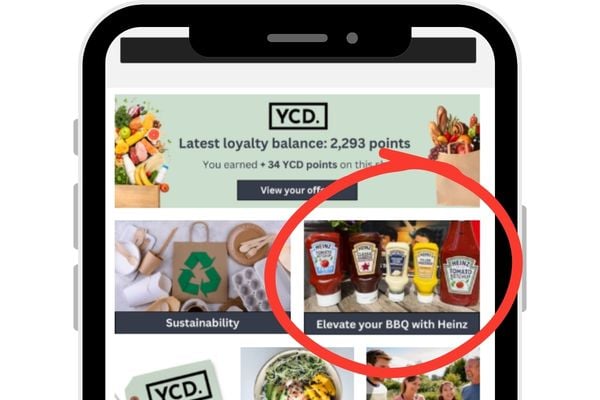
Using the grocery sector as an example: someone buying burgers, buns and salad for a barbecue could receive a relevant offer on sauces, charcoal or drinks. A customer buying nappies could be presented with an offer for baby wipes or relevant content from a supplier. A shopper purchasing ingredients for a particular meal could receive a recipe sponsored by a relevant food brand.
The important point is that these messages are not based on guesswork; they can be informed by what the customer has actually purchased.
That creates a level of relevance that is difficult to achieve with traditional in-store advertising, where the same message is often presented to everyone who walks past.
However, the opportunity is not to turn every receipt into another advertising space. Retailers risk undermining the customer experience if digital receipts simply become overloaded with irrelevant promotions.
The real opportunity is to make the content useful. A relevant offer, a genuinely helpful recommendation or an incentive connected to something the customer has just purchased is much more likely to add value than a generic advertisement.
This is where the combination of transaction data and digital receipts becomes particularly powerful.
Delivering measurable insights
Retail media has increasingly moved towards measurable performance. Brands want to know not just whether their advertising was seen, but whether it generated an action.
Digital receipts are naturally suited to this.
Yocuda’s clients achieve average open rates of more than 75%, with click-through rates reaching as high as 15%. Retailers can also track actions such as offer redemptions, website visits, app downloads, loyalty registrations and repeat purchases.
That provides a much clearer picture of what happens after an advert is delivered.
Consumers are already ready for digital receipts
Of course, none of this works unless customers actually want digital receipts. The good news for retailers is that the shift is already happening.
Yocuda research found that 72% of UK shoppers choose a digital receipt when offered one in-store.
There is also a broader move away from paper. Research shows that 85% of shoppers expect to receive fewer paper receipts, or none at all, within the next five years.
This suggests that digital receipts are not simply another marketing channel that retailers need to persuade customers to adopt. They are increasingly becoming part of what shoppers expect from a modern retail experience.
The receipt is no longer the end of the transaction
Retail media is still evolving, particularly within physical stores. There will undoubtedly be a role for screens, smart technology and other forms of in-store advertising, but not every retailer will want, or be able, to invest heavily in hardware across their estate.
Digital receipts offer a different route. They connect the transaction to the customer, the physical store to the digital environment and the purchase to what happens next.
For retailers, that could make the receipt one of the most valuable pieces of retail media inventory they already own.
The question is no longer simply whether retailers should replace paper receipts. It is what they could be doing with the customer relationship once the receipt has been delivered.
For more information on how digital receipts can drive additional revenue for your business, get in contact here.