Retail safety compliance – converting policy into operational proof
Retailers are operating in a legal environment that increasingly expects prevention, evidence and consistent implementation. A written policy remains important, but it is no longer enough to demonstrate that colleague safety is being managed effectively.
For retail leaders, the practical question is whether the organisation can show that risks have been identified, appropriate controls are in place and those controls are working across every store.
Existing duties already require action
Under UK health and safety law, employers must protect workers from work-related violence and assess the risks they may face. In retail, this includes physical assault, verbal abuse, threats and intimidation connected with the job.
The Worker Protection Act 2023 also requires employers to take reasonable steps to prevent sexual harassment. Current Acas guidance makes clear that this includes harassment from third parties such as customers and clients. Retailers must therefore consider public-facing risk before an incident occurs rather than relying solely on complaint handling afterwards. The Employment Rights Act 2025 contains further provisions relating to third-party harassment and an “all reasonable steps” standard for preventing sexual harassment.
As Stuart Lawrence from Shoosmiths stated at a leadership roundtable hosted by The Retail Bulletin in partnership with Peoplesafe:
“Workforce safety can’t be an afterthought. With new legislation on the horizon, businesses have a responsibility to go beyond compliance and create environments where people feel protected, valued and able to speak up before harm happens.”
What operational proof looks like
Compliance becomes credible when it can be seen in daily practice. Retailers should be able to demonstrate that they have moved from general statements of intent to controls that reflect real store conditions.
That evidence may include role-specific risk assessments, records of practical training, clear reporting routes, documented incident follow-up and regular audits of store-level implementation. It should also show how the business has responded to emerging patterns, colleague feedback and near misses.
A risk assessment that is completed once and filed away will quickly lose value. Retail environments change as staffing models, opening hours, store layouts, products and local crime patterns evolve. Controls need to be reviewed whenever working conditions change or an incident reveals a gap.
Where safety technology forms part of the control framework, procurement teams should also check relevant standards and supplier accreditations rather than assessing features alone. Peoplesafe supports retailers with accredited personal safety solutions that give colleagues a direct line to trained help whenever an incident occurs.
Make prevention visible in stores
Effective compliance should be understandable to the people it is designed to protect. Colleagues need clear guidance on how to respond to aggression, when they can disengage from an unsafe situation and how to call for help.
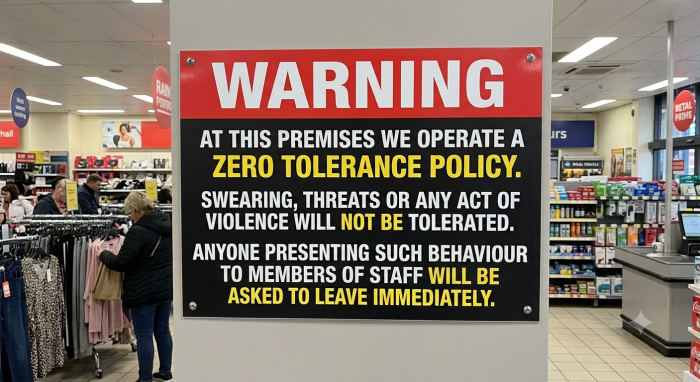
Practical measures may include visible behavioural standards for customers, de-escalation training, safe words or colleague intervention cues, personal safety alarms and defined escalation procedures. The right mix will depend on the risk profile of each store and role.
Training should reflect situations that colleagues may genuinely face. Scenario-based learning is more useful than generic policy awareness when someone needs to manage an aggressive customer, respond to suspected theft or support a colleague immediately after an incident.
Reporting and follow-through matter
Low reporting can create a misleading picture of safety. Employees may decide that an incident was not serious enough, believe nothing will change or worry that reporting will create additional work.
Retailers should make reporting simple, accessible and worthwhile. Every report should lead to a proportionate response, and colleagues should be told what action has been taken. Incident records should capture what happened alongside the investigation, any support provided, the changes made and next review date.
This creates a stronger audit trail while helping the organisation learn. It also allows leaders to identify repeat locations, times, behaviours and operational conditions that require intervention.
Leadership turns policy into practice
Clear ownership is essential. Health and safety, HR, operations, loss prevention and finance may each hold part of the picture, but fragmented responsibility can leave gaps. Senior leaders should agree who owns the strategy, how performance is reported and what evidence is reviewed at board level.
Effective retail safety compliance requires policies to be put into practice. It means creating stores where colleagues can work with confidence and speak up before harm occurs. Organisations that can evidence consistent action will be better placed to protect their people, strengthen trust and respond as legal expectations continue to develop.
………………………………………………………………..
To find out more visit Peoplesafe here.