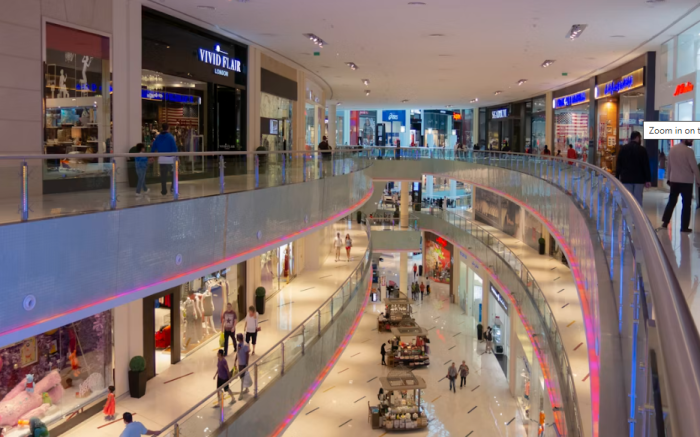
How department stores became leisure destinations
For decades, the British department store followed a simple promise: walk in, browse the haberdashery, ride the escalator past perfume and homeware, and leave with a paper bag and a receipt.
Names like John Lewis, Selfridges and Harrods built their reputations on the sheer range of goods under one roof. But that model has shifted dramatically. The modern store sells far less of the transactional and far more of the memorable — a coffee with a friend, a beauty workshop, a gin tasting on the third floor. Retail has become something people do for pleasure, slotting neatly into the same evening-and-weekend rhythm that now includes streaming a boxset, scrolling a social feed, or settling in for a bit of online entertainment.
Subscribe to TRBThat last category has grown into a substantial part of how British adults spend their downtime, and it sits closer to the high street than many realise. When someone finishes a Saturday wandering Selfridges’ rooftop or queuing for a Harrods food hall treat, the evening’s entertainment increasingly happens on a screen — and for a slice of UK players, that includes reviewing and choosing from Non Gamstop casinos UK, a category of offshore sites ranked for welcome offers, safety guidance and overall ratings. These review pages exist because adults want to understand how such sites work before they engage, comparing options like Luna Casino, Play Kasino and Swift Casino in the same considered way they’d compare a store’s loyalty scheme. It’s leisure research, plain and simple, and it belongs to the same consumer day as a trip into town.
Then: The Cathedral of Commerce
To understand the shift, it helps to picture the original. The Victorian and Edwardian department store was a marvel of its age — a “cathedral of commerce,” as the phrase went. Gordon Selfridge famously declared that customers should be able to spend a whole day in his Oxford Street emporium without buying a thing, and he meant it. There were reading rooms, a roof garden, even a rifle range at one point. Yet the economic engine underneath was relentlessly product-led. Footfall converted to sales of fabric, furniture and fashion, and the in-store experiences existed mainly to keep shoppers lingering long enough to fill a basket.
For most of the twentieth century that formula held. Stores like Debenhams, House of Fraser and BHS anchored town centres, and a visit was an errand with a touch of occasion. The leisure element was real but secondary — a tea room here, a Christmas grotto there. Spending itself was about acquiring things, and the household budget reflected that, with a far larger share going on goods than on out-of-home enjoyment.
Now: Experience Sits at the Centre
Fast forward, and the picture has inverted. Online retail handles the bulk of straightforward purchasing — the click-and-collect basics, the predictable restocks — which has forced physical stores to justify the journey. Their answer has been experience. Selfridges runs cinema screenings and listening parties. John Lewis has leaned into beauty halls staffed like spas, with brow bars and skincare consultations. Liberty hosts craft workshops. Food and drink, once an afterthought, now drives whole floors, from Harrods’ dining halls to the restaurant clusters that crown flagship stores.
This is “experience retail,” and it reflects a broader change in how disposable income flows. Official figures on Family spending in the UK show recreation and culture commanding a meaningful slice of the average household budget, sitting alongside the essentials rather than trailing far behind. People are willing to pay for moments, not just merchandise — and retailers have rebuilt their floors accordingly.
Where Digital Leisure Fits the Day
The crucial point for retail strategists is that experience retail does not exist in a vacuum. It competes for — and shares — the same hours as everything else a person might do for fun. A consumer who spends an afternoon at a beauty workshop is the same consumer who streams a drama that evening, listens to a podcast on the commute, and perhaps browses entertainment options online before bed. Academic work on the transformation of leisure activities describes exactly this blurring, where physical and digital pastimes interleave across a single day rather than occupying separate worlds.
That continuity matters because the boundaries have softened. The escalator ride at Selfridges and the evening scroll are stops on one journey of seeking enjoyment. Online entertainment — from gaming subscriptions to the offshore casino sites some UK adults review and rank — occupies the digital end of that same leisure spectrum. Retailers studying their customers now think in terms of the whole day’s attention, not just the minutes spent in-store.
What Retailers Are Learning From the Crossover
Savvy retail teams have started borrowing the logic of digital entertainment to design physical experiences. Personalisation, instant feedback, a sense of discovery, the small thrill of something unexpected — these are the hooks that keep people engaged online, and they translate surprisingly well to a shop floor. Loyalty schemes increasingly mimic the gamified, points-and-tiers feel of digital services. Pop-up events create scarcity and buzz. Even the layout of a flagship now nudges customers toward moments of delight rather than straight lines to the till.
The lesson cutting across all of it is that the modern consumer no longer separates “shopping” from “leisure.” A trip to a department store is entertainment; an evening of online entertainment is leisure; and both draw on the same finite pool of time, money and attention. The retailers thriving in this landscape understand they’re not just competing with other shops — they’re competing with every enjoyable way a British adult might spend a free hour. The cathedral of commerce has become a destination for experiences, and that single shift explains more about the future of the high street than any sales figure ever could.