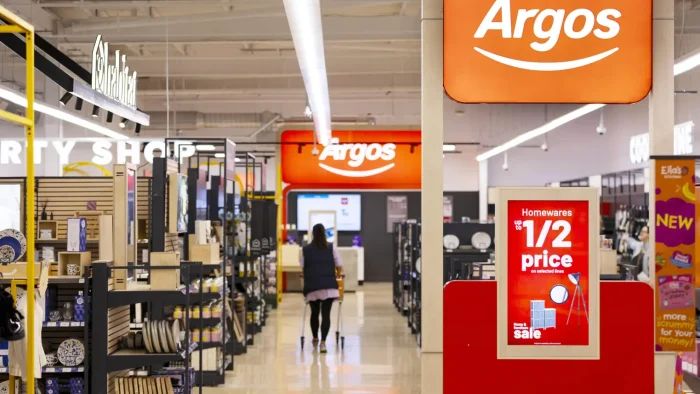
Giving Argos the attention it deserves
Selling Argos for £120 million recently compared with the £1.3 billion that it was bought for in 2016 suggests its owner Sainsbury’s was flogging a nag rather than a thoroughbred. But this would be wrong as the general merchandise retailer still has many things going for it.
Much has changed in the world of retail in the 50 years since Argos was created and it has arguably rolled with the changing times. In fact, it has more than rolled because it has been a pioneer in many respects.
Subscribe to TRBIt is over 20 years ago that I interviewed Sara Weller, then MD of Argos, who highlighted how Argos had been able to steal a march on most other retailers with e-commerce. The catalogue-based model involving high street stores holding stock in the back rooms meant Argos had incredibly good visibility of stock compared with virtually every other retailer.
This enabled it to create click & collect. In October 2014 I met with Andy Morrey, then head of e-commerce at Argos, who recalled in 2000 that he had what he called the “most productive pint of my career”. He was drinking with a colleague when they came up with Click and Collect. The idea being to let customers reserve something online and to then come and pick it up in the stores. It quickly came to represent a third of Argos’ sales and revolutionised the way people shop.
Under the ownership of Sainsbury’s the Argos business was able to close its own stores and instead open units within the supermarket’s larger outlets. This genuinely seemed like a great (financially prudent) idea, especially as the grocers were expanding beyond food at the time. But over time they have all rowed back to instead focus more purposefully on their core businesses – food.
Argos became something of an unwanted distraction, which was not helped by the rising levels of competition it faced from Amazon and other online GM specialists. But despite this it has still maintained a reasonably healthy position in the market and is undoubtedly one of those heritage brands that many people would be extremely disappointed see go the way of Woolworths and numerous other high street names.
So often the purchase of such brands has been nothing more than an asset-stripping exercise by investment firms rather than retailers looking to return them to former glories. Many of these businesses have limped on for a period before collapsing with unpaid debts and a loss of jobs.
In complete contrast the Argos acquisition is backed by some proper heavyweight retailers. They don’t come much heavier than the slim-line Richard Pennycook who has enjoyed great success at the likes of the Co-op and Morrison’s. He is joined by Trevor Strain, former CFO and COO at Morrison’s, and former financier Matt Truman who founded True.
They will be able to create the managerial environment and strategy whereby Argos will be the centre of attention rather than a subsidiary of a much larger operation. Pennycook has highlighted that it will be business as usual in the early days before some new strategic thinking can be applied to generate the growth that they know is required to propel the business forward. This will address its treading-water dynamic that had set in under the latter years of Sainsbury’s ownership.