How AI is changing HR: Joanna Griffin on people, technology and the future of retail
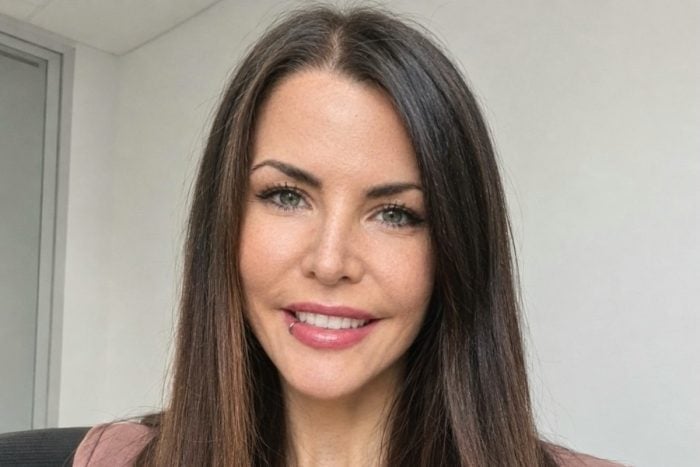
Joanna Griffin has built her HR career around taking on difficult challenges, from leading complex people projects to building HR functions from the ground up.
Currently head of people and safety at American Golf, she has also been exploring how AI can give HR teams more time to focus on people, while creating practical, secure tools designed around the realities of retail.
Subscribe to TRBYou’ve built your career around taking on difficult challenges. Looking back, what have been the key moments that shaped your career?
I’ve never been afraid to get stuck in. I’ve always looked beyond the level or title of a role and focused on the problem that needs solving. That has often led me to take on big assignments, sometimes without knowing exactly where they would lead.
One of the most defining moments was leaving a permanent senior business partner role at a Big Four firm to take a fixed-term contract leading a large-scale redundancy and TUPE project. There was no guarantee of a job at the end, but I knew it was the kind of challenge I wanted to take on. Within a year, we had successfully managed 250 redundancies and 42 TUPE transfers, and I was offered my first head of role while still in my early twenties.

Later, I joined a construction business where there was no UK HR function and built the department from the ground up. I also worked across 18 European countries to lead diversity and inclusion, partnering with the United Nations Women’s Empowerment Principles despite never having done anything like it before.
The thread running through my career has been simple: see the problem, understand it properly and have a go at solving it. I have sometimes had to overcome assumptions about my age or appearance, particularly in male-dominated environments, but credibility comes from knowing your subject and being a safe pair of hands. Once people see that you understand the detail and can deliver, those assumptions begin to fall away.
You’ve become increasingly interested in AI as a practical tool for HR. What made you realise it could genuinely change how HR teams work?
Like many people, I began by experimenting with chatbots and using them as a thinking partner to work through a case, an idea or a problem. I quickly realised the opportunity went far beyond that.
AI can take on time-consuming administration, support analysis and drafting, improve workflows and connect different parts of the employee journey, from recruitment to onboarding.
What excites me most, though, is its creative potential. HR teams have traditionally had to buy expensive enterprise systems, even when those systems did not quite fit the organisation. AI gives us the opportunity to build tools around the way our own business works, without needing to be a traditional software developer.
At American Golf, we took the familiar nine-box talent grid and turned it into an interactive tool. Managers can complete the process with their HR business partner, move people around the grid, identify performance issues and receive coaching prompts from an AI agent.
We have also created a case management platform for a high-volume retail environment. It supports workflows for investigations and grievances, draws on ACAS guidance and UK employment law, and helps HR teams make sense of complex case information.
That was the point at which AI stopped feeling like a buzzword to me. It became an unlock. It gave me the tools to turn ideas I already had into practical solutions that can genuinely improve how HR works.
HR deals with highly sensitive information, so how do you balance the opportunities of AI with trust, privacy and security?
For us, particularly with the case management platform, security had to be built in from the beginning rather than added later.
The platform is coded, which gives us greater control over the safeguards. Data is encrypted in transit and at rest, and we have carried out penetration testing ourselves, through an AI agent and with an independent third-party security company.
We have data processing agreements in place, have aligned the platform with ISO 27001 principles and the EU AI Act, and are working towards SOC 2. Just as importantly, the system is deliberately restricted to trusted sources such as ACAS guidance and UK government legislation rather than searching the open internet.
The human remains firmly in the loop. The AI can identify themes, flag risks, suggest reasonable adjustments, draft letters and help structure an investigation, but it does not make decisions. Those judgement calls always sit with the HR professional.
We have taken a similarly open but controlled approach across the wider business. Our AI committee brings together a head of department from every function to discuss what tools are being used, what information is going into them and what value they are adding.
We want people to use AI, but we also want them to understand it and use it responsibly. Confidence comes from clear governance, education and transparency.
You’ve spent much of your career championing the human side of HR. What do you think AI means for the role of the HR professional?
I think we are going to see enormous change, but AI will not replace HR. It can automate administration, yet it cannot replace judgement, coaching, decision-making or the conversations that really matter.
The opportunity is to use AI to create more time for that strategic and human work.
We are not fully there yet. Many organisations are experimenting with lots of different tools and may even be creating more work in the short term. The next step is to become much more deliberate: what are we implementing, what benefit does it add, what does it cost, where is time being saved and how will we use that time well?
What excites me most is the levelling effect. Technology that was once available only to large organisations with substantial budgets is becoming accessible to smaller businesses and HR teams willing to experiment.
We can move faster, create tools that fit our organisations and find more engaging ways to share information with employees.
There is also an important challenge. If AI takes over the entry-level tasks through which many people traditionally learnt their craft, we must think carefully about how early-career HR professionals build judgement and experience.
We cannot simply ask them to manage the technology. We need to give them meaningful exposure to employee relations, difficult conversations and strategic decision-making.
The future of HR will not be less human. Used well, AI should give us more space to be human, while helping us work with greater pace, creativity and confidence.
You will shortly be taking what you’ve learnt at American Golf and applying it beyond the business. What have you learnt about what retailers need from AI?
The work at American Golf showed me that retailers need practical HR technology designed around the realities of their businesses, rather than another off-the-shelf system that asks teams to change the way they work.
We have built and tested the model in a live, high-volume retail environment, so the next step is to make that thinking and capability available more widely.
I’ll be offering retailers access to AI-enabled HR tools and support shaped around their own organisation. This includes areas such as employee relations case management, investigations and grievances, talent mapping and manager coaching.
The aim is to help HR teams manage complex information more clearly, reduce administration and give managers better guidance, while keeping every important decision with a person.
It is not about taking one American Golf solution and simply dropping it into another retailer. Every business has its own culture, policies, risk profile and way of working, so the model needs to be adapted thoughtfully.
What we can bring is the learning, the framework and the practical experience of building something that works in retail.
For me, this is a natural next chapter. I want to help retailers access secure, responsible and useful AI without the cost and complexity that have traditionally put bespoke technology out of reach.
If we can give HR professionals more time to support people, coach leaders and make better decisions, that is where the real value lies.
Working retail HR? Then join us at our free-to-attend Retail HR Summit on 15 October. Reserve your place while tickets last.