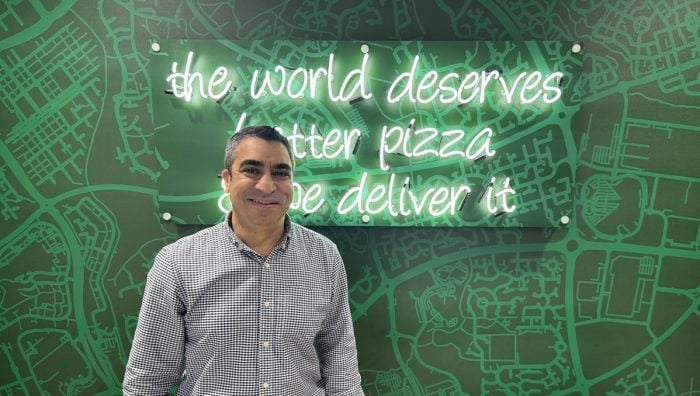
Conversation with… Vish Talreja of Papa Johns
Vish Talreja has joined Papa Johns as director of property and development, taking charge of growing the pizza brand’s estate of more than 450 restaurants.
As he settles into the role, he talks to TRB about why a store’s success is largely set before it opens, what he learned about expanding beyond crowded prime locations, and why he is determined to be “best friends with operations”.
Subscribe to TRBHe also shares his priorities for his first six to 12 months and where he sees the biggest growth opportunities for food and hospitality brands.
You’ve worked across some major food and hospitality brands before joining Papa Johns. How did you first get into the property and development sector, and what drew you to this side of the business?
It was initially a sideways move and an opportunity. I was in the quick-service restaurant (QSR) industry, working in operations, and that role involved working across multiple departments. The opportunity came up with a focus on bringing more of an operational mindset into property, so that the two areas could be much more closely aligned.

In the early days, I was trying to work out how best to do it. The penny-drop moment for me was realising that a store’s success is largely determined before it opens. Stores work extremely hard to bring customers in, but if you plan a store properly from the start, with the right location, the right customer in mind, the right operational vision, a sensible rent bill and a strong design, then everything that follows is set up for success.
Coming from operations, it was about understanding how I could work very closely with operations, and how operations could work with me. That sounds easier than it is, because you’re almost asking someone else to change part of their core job. But once that lands, it becomes much simpler. You’re recruiting the right people in the right locations, you have a clear view of the customer, the design is thought through, and decisions aren’t simply being made because the rent is cheap or because there’s a good deal on the table.
The pandemic also brought me into a new space in property. It meant getting to know landlords and agents much more individually, understanding their pressures, and building proper commercial relationships. Through COVID, when negotiations were difficult for everyone, those relationships became really important. We came out stronger on the commercial side because we had built partnerships rather than purely transactional relationships.
At Itsu, you helped shift the brand from a London-centric footprint to national UK expansion. What lessons from that experience will you be applying as you look to grow Papa Johns’ 450-plus restaurant estate?
The first lesson is about the core rather than growth, which may sound strange. With any brand, there is a core. At Itsu, that London-centric model worked very well. With Papa Johns, there are also markets where delivery and the existing customer base work very well. So, whenever you think about growth, you have to protect the core first and continue to grow it.
One of the biggest lessons from Itsu was that prime markets and prime shopping centres are heavily crowded. There’s a lot of competition, and when everyone is competing for the same real estate, rents move in one direction, and everyone must work much harder. So, the question became: how do we move into new markets? But it wasn’t solely a property problem.
Operations could recruit better in secondary regional towns and university locations. Property could find better sites. There was customer demand. A London-centric lunchtime business could become an evening business elsewhere. Then you overlay the detail, such as whether the environment, lighting and design are right for the moment and the customer occasion.
The lesson I’m taking into Papa Johns is to protect and grow the core, particularly delivery, collection and the existing sites that already work very well. Then it’s about looking for white space in the market and thinking ahead to the next wave of customers. That includes how customers interact digitally and how their expectations are changing.
There’s also an opportunity in secondary towns, where demand and affection for the brand are strong, and in new partnerships. That includes existing franchise partners who want to grow, as well as new partnerships with a wider range of landlords and property models. There’s already momentum in the business, and the brand is in a strong place to build from.
What excites you most about this new role at Papa Johns, and what are your key priorities in the first six to 12 months or so?
What excites me is that the business already has momentum. It’s a brand I genuinely love, and the people have been phenomenal. During the interview process, the senior leaders were open about the opportunities and challenges, and that level of honesty and humility made me feel that this was where I needed to be.
Over the next six to 12 months, my priorities are to understand the business properly, get to know the franchise partners, build relationships with new partners, and make sure I’m fully aligned with the leadership team and my own team. One of my personal targets is to be best friends with operations, because I know that when property and operations work closely together, the results are much stronger.
Where do you see the biggest opportunities for growth for food and hospitality businesses these days?
This is about understanding today’s customer and keeping an eye on the future. The core of Papa Johns and many other brands is generally set, particularly around delivery and collection, but the future is about convenience. Customers want convenience in every form, whether that’s an app that does everything, grab-and-go food, or click and collect.
For all brands, the opportunity is to protect the core, look carefully at where customer trends are going, and avoid simply fighting for the same highly competitive real estate. Growth will come from understanding where the customer is heading and making sure the brand is set up to meet that demand.
It’s also important that brands stand for something. If a brand only follows a customer trend without having a clear point of view or a loyal customer base, then the trend will remain just a trend. The brands that win will be those that evolve with the customer, across digital, property, signage, campaigns and the overall experience.