

Pioneering positive change in Wellbeing & Healthcare through ethical retail practices.
In conversation with Hannah White: Community support at Naturally Tiwa Skincare.
In the competitive world of retail, the impact of a brand extends beyond product sales to its ethos and commitment to social causes. Naturally Tiwa Skincare, under the pioneering leadership of Shalom Lloyd, who was recently awarded an MBE, exemplifies how retail can drive change in the wellbeing and healthcare sector, particularly in cancer care.
We spoke with Hannah White, Operations & Marketing Manager, about the brand’s journey and its transformative impact on those undergoing cancer treatment.
A milestone achievement: B Corp certification
Led by Hannah, Naturally Tiwa Skincare has recently earned the prestigious B Corp certification, distinguishing itself as a leader in ethical business practices. Hannah explains, “The B Corp certification was an incredibly challenging and rigorous process, particularly for a small company like ours. Achieving this certification is not just about meeting a benchmark but about embodying the principles of responsible business across governance, community engagement, environmental sustainability, and customer relations.”
Shalom Lloyd’s leadership is remarkable not only for her entrepreneurial spirit but also for her dedication to ethical and sustainable business practices. As the only black woman founder to have secured B Corp certification for a skincare brand in the UK, she sets a benchmark for future leaders in the industry.
Understanding the challenge
Cancer treatments, known for their rigorous demands on the body, often leave patients grappling with neglected side effects such as severe skin issues. “Over 75% of patients experience some form of skin toxicity,” Hannah points out.
The retail industry’s role in promoting products that address these often-overlooked needs is crucial.
Cancer treatments such as chemotherapy and radiation can severely compromise skin health, presenting a range of dermatological challenges. These treatments, while targeting cancer cells, can also affect the skin, leading to several possible side effects including dryness and itching, xerosis, radiation dermatitis, photosensitivity, and hyperpigmentation. The skin-related side effects of cancer treatments can significantly impact a patient’s quality of life, affecting their comfort and self-esteem.
Skincare products like those offered by Naturally Tiwa Skincare are designed to address these issues by providing hydration, reducing inflammation, and soothing irritated skin without the use of harsh chemicals. The use of natural, gentle ingredients is crucial, as they are less likely to cause further irritation or discomfort to sensitised skin.
Naturally Tiwa Skincare is making strides in accessible healthcare with products rich in traditional ingredients like shea butter, now more widely available thanks to the brand’s retail partnerships. “Our presence in stores not only increases product accessibility but also raises awareness about the skin-related side effects of cancer treatments,” says Hannah.
Products are available online and in retailers including Harrods and Superdrug.
 Empowering through partnerships: MK Snap and SMILE
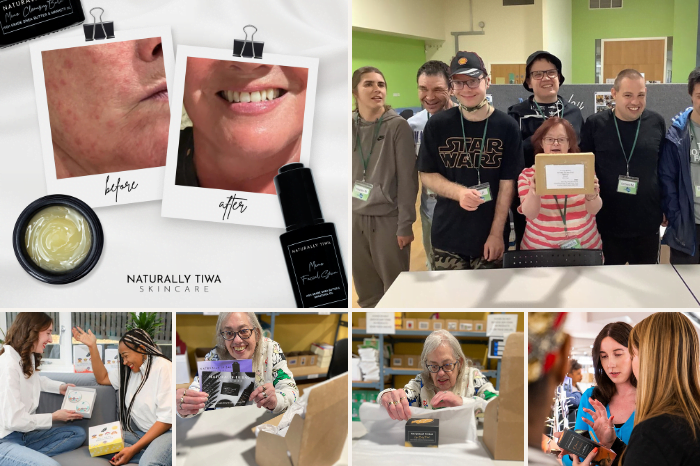
The company’s ‘way of conducting business’ extends to creating impactful community initiatives. MK Snap, an organisation providing fulfilling work to individuals with disabilities, handles order fulfillment for Naturally Tiwa, integrating social responsibility directly into the brand’s supply chain.
Simultaneously, the SMILE project, led by a dedicated team in partnership with The Lewis Foundation, represents a unique community-driven approach to supporting cancer patients. “SMILE—Simple, Mindful, Impactful, Love-fuelled, Elevating—is not just an event; it’s a movement,” Hannah describes. Held monthly, these workshops offer free activities, education, and a sense of belonging, all designed to put a smile on participants’ faces. Each session provides attendees with a SMILE Wellbeing Kit, which includes Naturally Tiwa Skincare essentials, ensuring ongoing support and comfort.
Sustainability at heart
“Naturally Tiwa is committed to being ‘Planet Hugging’—our products are created and packaged with the utmost respect for our environment,” Hannah states. The brand’s ethos of healthy, ethical, and sustainable living permeates every aspect of its operations, ensuring that luxury and sustainability go hand in hand.
As the retail industry continues to evolve, its role in promoting brands that offer more than just consumer goods but also provide real solutions to real problems becomes increasingly important. “Through our efforts, supported by our retail partners, we hope to bring not just relief but also dignity to the lives of those battling cancer,” concludes Hannah.
This integration of retail strategy not only enhances Naturally Tiwa Skincare’s market presence but also amplifies its impact on community health and well-being.
For retailers looking to make a difference, supporting brands like Naturally Tiwa Skincare offers a pathway to meaningful engagement with consumers and communities alike.